
Richmond County Neighbor Sources
Each official source describes a different slice of a block. Augusta Maps is the best first tool because it shows the target parcel and touching parcels in the same view. Tax cards identify owners and correspondence addresses. A purchased voter file identifies registered voters through residence fields, but it omits nonvoters and protected addresses. Historical directories supply dated context, not current confirmation.
| Block source | Evidence around an address | How to reach it |
|---|---|---|
| Augusta Maps | Adjoining parcels, site addresses, PINs, property fields, and districts | Free map browse |
| Property cards | Owner, tax mailing location, homestead clue, and tax year | Free through Augusta Maps |
| Georgia voter list | Registered voters by residence components and precinct | Paid state product with use limits |
| City directories | Past heads or businesses in editions with street sections | Georgia Room or limited lookup |
| Association contacts | Voluntarily published officers, service areas, and public channels | Organization publication only |
| Open records | Existing neighborhood plans, permits, or code files | Custodian-specific request |
Ownership and residence must remain separate columns in any notes. A different tax mailing address can suggest an absentee owner or an entity, but it does not prove where anyone lives. Homestead data is a better owner-occupancy clue for the stated tax year, still not a household roster.
Build a Richmond County Neighbor Block
The Augusta Maps property search accepts an owner, road, parcel number, or street address. Use All Fields first, then choose the exact parcel site-address result. Several features can match the same text, so the first item is not automatically the target lot. Selecting a result highlights it and opens descriptive data.
The block grows through map clicks, not through a broad name list. Selection Mode has New, Add, and Remove controls. New replaces the set. Add preserves the first parcel while more lots are chosen. Remove fixes an error. Map Layers changes context, Info opens feature data, and Measure can test distance. Download CSV saves selected features for comparison.
The official January 2024 map guide documents these controls and mailing-label output. Export is useful for parcel research, but it does not prove residence or authorize contact.
Filter Richmond County Neighbor Parcels
Augusta’s parcel service keeps deleted polygons and changes their status to Retired. This is a useful historical quirk. An old shape may explain how a tract was split, combined, or replatted. It can also create a false present-day neighbor if status is ignored. Current block work should remove retired features before naming adjacencies.
Parcel boundaries update as final plats are processed. Save the PIN, status, tax year, and legal description with each lot. A site address is the physical location. A mailing address receives tax correspondence. The legal description anchors the land even if a road number changes. Those distinctions are more reliable than a visual screenshot alone.
- PIN
- The parcel identification number used to follow one mapped tract.
- Situs
- The physical parcel address, which may differ from the owner’s mail destination.
- Homestead code
- A dated owner-occupancy clue, not proof of every resident.
- Retired parcel
- A deleted historical polygon retained in the GIS data.
Map Richmond County Neighbors
A repeatable map process keeps the immediate block distinct from a whole named street. Begin at one verified address, click the polygons that touch it, and inspect each property card. Stop at the chosen block edge or radius. For a road-wide ownership and deed chain, move to the Richmond County street directory.
- Search the address in Augusta Maps and select the parcel site-address result.
- Record its PIN, status, tax year, site address, mailing address, and owner.
- Choose Add, click each adjoining polygon, and use Info to inspect its fields.
- Remove retired or mistaken parcels, then export the clean selection if useful.
- Label owners as owners. Add a resident only when a dated resident source supports it.
The flow is simple: address to target parcel, target parcel to adjacent polygons, polygons to property cards, and cards to carefully labeled owners. Each step keeps a source and date.
Richmond County Neighbors in Voter Files
Georgia’s My Voter Page is for a person to check their own registration, polling place, districts, sample ballot, and participation information. It is identity-gated and cannot be browsed as a neighbor roll. Block-level registration analysis requires a lawfully purchased Secretary of State voter-list product.
The public file splits residence into street number, directions, name, type, unit, city, and ZIP. It also includes precinct and district fields, status, registration dates, and separate mailing components. Use residence data for a block. Mailing data only describes correspondence. Georgia has no party registration, and a participation field never reveals how anyone voted.
A Richmond County list is priced at $70 under the schedule effective July 1, 2024. Smaller district and precinct products are available. Delivery is electronic, with a current estimate of about two weeks. O.C.G.A. § 21-2-601 prohibits commercial use of the elector list. Even a proper file leaves out unregistered adults and protected addresses.
VoteSafe Protects Richmond County Neighbors
VoteSafe creates necessary blank spots in public registration data. It protects the residence address of eligible Georgia voters who face family violence or stalking risk, along with qualifying shelter residents. The program operates under O.C.G.A. §§ 21-2-225 and 21-2-225.1. A missing public address is not an invitation to search around the protection.
The Richmond County Board of Elections maintains local registration and can answer administrative questions at 535 Telfair Street, Suite 500, Augusta, by phone at 706-821-2340. My Voter Page remains the right route for a voter checking their own information. A paid list is the route for lawful public-file analysis.
Public products do not include a full birth date, telephone number, Social Security number, or driver-license number. Birth year and split residence or mailing fields do appear in the documented layout. Handle those details with care and retain only what the civic or family-history task needs.
Note: VoteSafe protection overrides curiosity about who may live beside a Richmond County parcel.
Richmond County Neighbor Contacts
No official countywide directory of Augusta neighborhood or HOA members was verified. Associations may voluntarily publish officers, public contact channels, meeting details, and service areas. Those facts can explain which group speaks for a place. They do not establish that each parcel owner is a member or reveal who lives in a home.
Board of Elections
535 Telfair Street, Suite 500
706-821-2340
Registration and election-file custodian
Augusta GIS
535 Telfair Street
706-821-2300
Parcel and address-layer questions
Georgia Heritage Room
823 Telfair Street, third floor
706-826-1511
Historic directory and neighborhood research
Congregation, watch, club, and association rosters remain private unless the group itself releases them. Even a public officer list describes an organization, not all neighbors. Existing neighborhood plans, permits, or code files may instead be requested from the government custodian under the Georgia Open Records Act.
Historic Richmond County Neighbors
The Georgia Heritage Room holds Augusta city directories from 1841 forward. Editions with street sections can place dated household heads or businesses in house-number order. Early runs are not complete before 1870, and African American residents begin appearing only in 1872. A missing name may reflect the source’s bias or gap, not absence from the block.
Read the address section and name entry together. Record the edition, publisher, page, and abbreviation key. Publication may follow the actual canvass. Pair the result with census microfilm, the Augusta Chronicle archive, deeds, funeral programs, and local indexes when a historic identity needs support from a second source.
The Georgia Room serves fragile early volumes on microfilm and keeps more recent decades in bound form. Its limited remote service can check one name across one to five directory years for $5. That service is a focused lookup, not a full block reconstruction.
Compare Richmond County Neighbor Tools
Official rolls are narrower than commercial neighbor products, but their limits are visible. They identify the custodian, record date, and role. Commercial compilations may blend old addresses, relatives, and same-name people without showing a reliable source. Treat any such result as an unverified lead, never a final claim.
| Source type | Strength | Main limit |
|---|---|---|
| Augusta parcel and tax roll | Official parcel, owner, and dated property fields | Owner does not equal occupant |
| Georgia voter file | Official registration residence components | Omits nonvoters and protected addresses |
| Voluntary community contact | Current public officer or group channel | Not a member or household roster |
| Commercial compilation | Broad lead gathering | Can be stale, merged, and poorly sourced |
Corrections belong with the originating custodian. An assessor error goes to the assessor or GIS team. A registration error goes to Elections. Suppressing a copied profile does not amend the official record from which it came.
Protect Richmond County Neighbors
Address research can expose scams as well as names. If a parcel or mail claim appears fraudulent, preserve the record date and contact the proper public office before acting. The U.S. Postal Inspection Service reporting page handles mail-related reports.

The pictured federal channel is for reporting a concern, not for compiling household information. Georgia consumer complaints and federal fraud or identity-theft tools likewise serve problem reporting and recovery.
Georgia's consumer complaint portal accepts reports about transactions and deceptive practices.
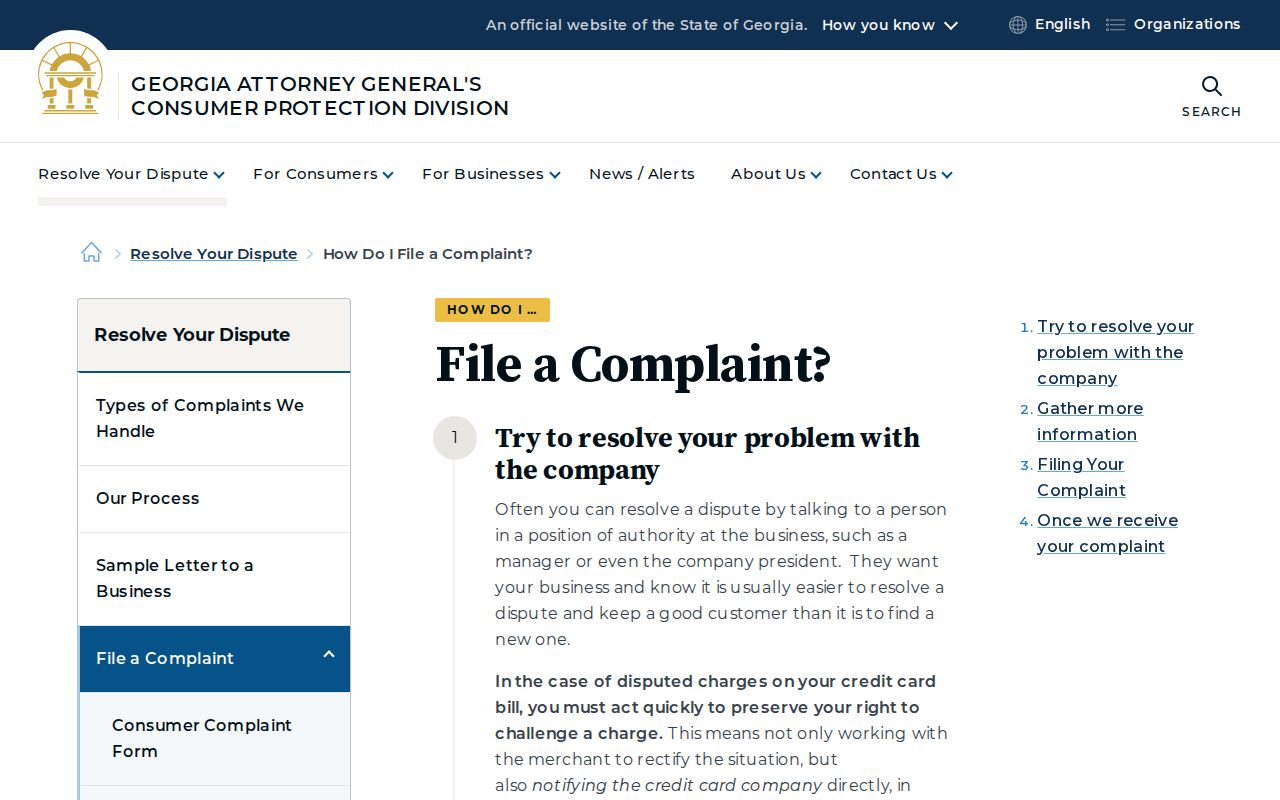
Use the state form for the complaint it describes, not to seek private information about another household.
The Federal Trade Commission fraud-reporting service is the federal channel for many scam reports.
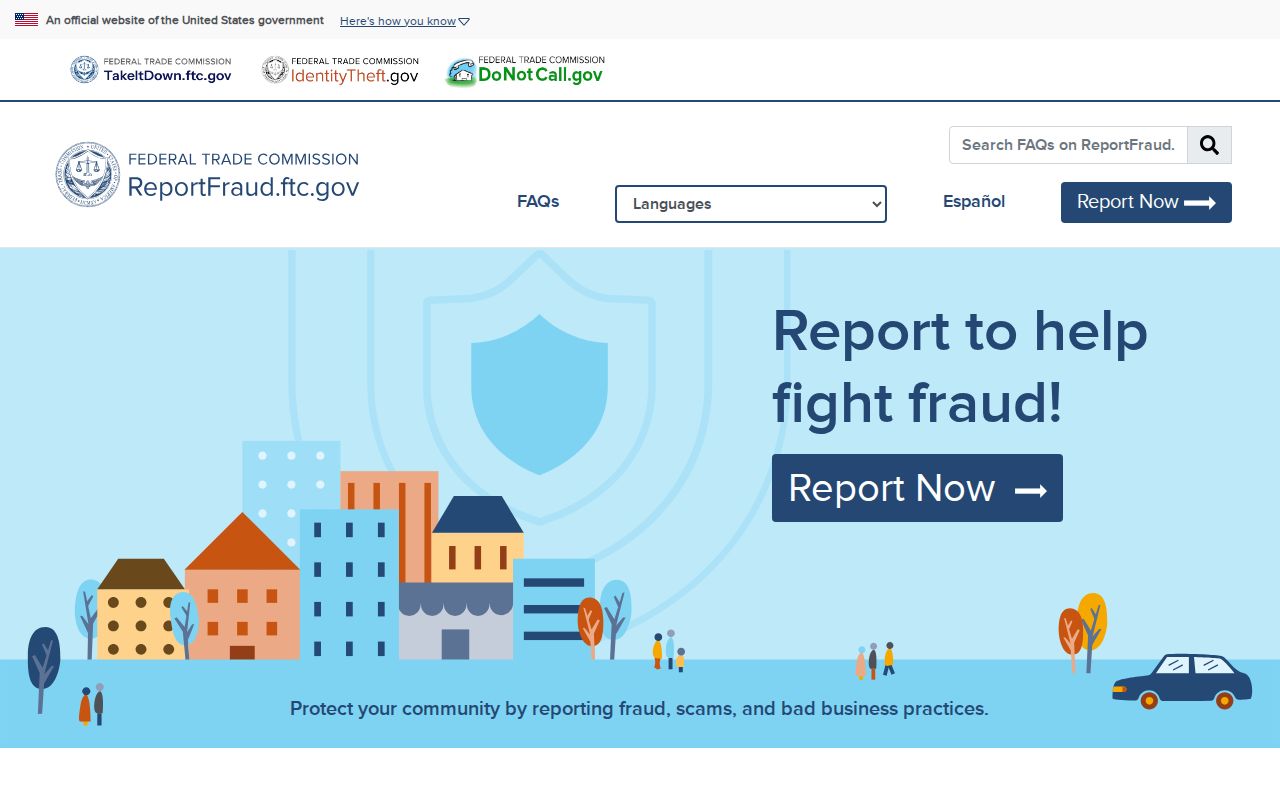
A report records the suspected scheme and supports enforcement analysis; it is not a neighbor lookup.
IdentityTheft.gov supplies a recovery path when personal data has been misused.
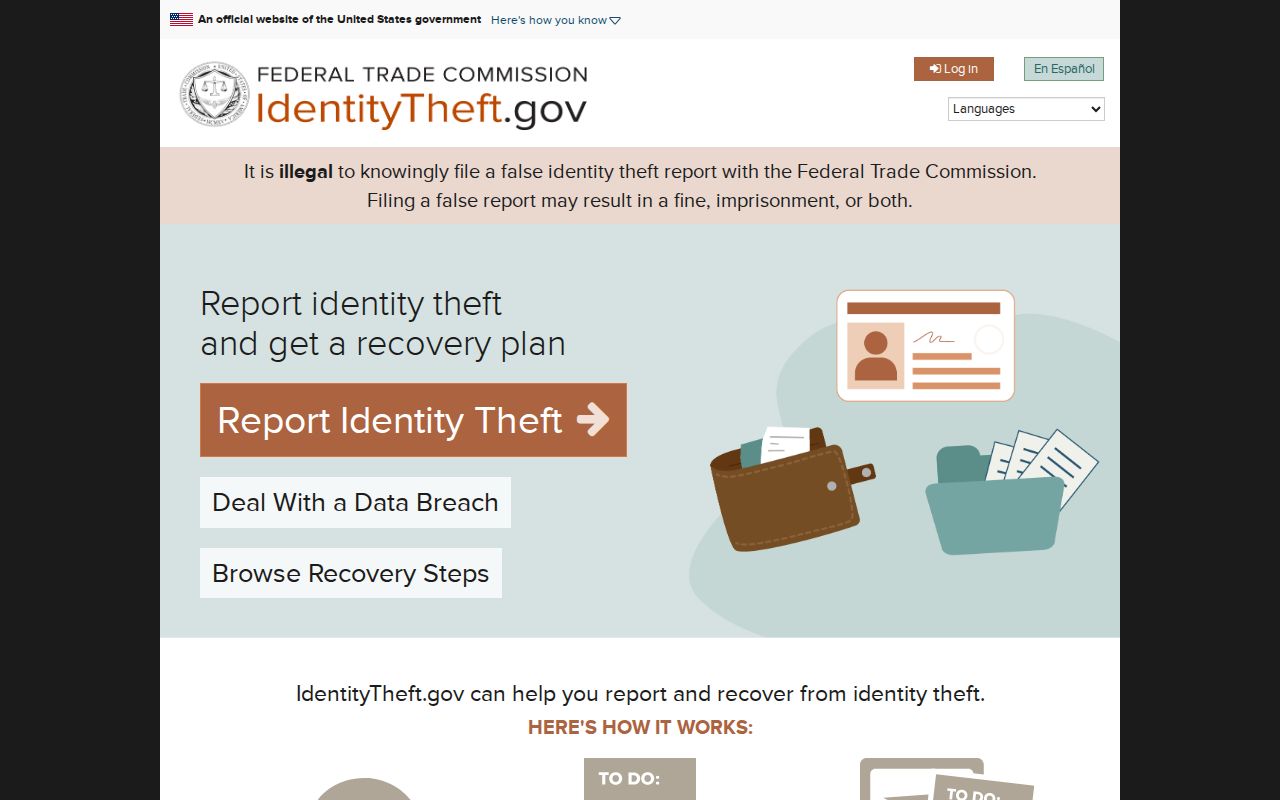
The recovery tool turns a documented identity-theft problem into concrete next steps while keeping the focus on safety.
Richmond County Neighbor Privacy
No official source creates a complete household roll. Property records omit renters, children, roommates, and most other occupants. Voter data omits nonvoters and protected people. Utility and delivery customer files are not public neighbor directories, and motor-vehicle personal information is restricted by federal law.
A dated public record may also be wrong today. Verify the parcel status and tax year, preserve the registration file date, and avoid turning an old directory entry into a current claim. Contact the office that maintains the source when a correction is needed.
Lawful use. Richmond County block records support civic research, family history, and personal safety awareness. Never use them to watch, stalk, harass, intimidate, or harm anyone.
Good neighbor research accepts a blank when privacy or source limits require one. It distinguishes an adjoining owner from a resident and a public association officer from a household member.